

IF Initiative is co-organizing an “Alternative Futures” workshop to bring together decision-makers and researchers around the theoretical and practical challenges of Anthropocene strategy
On September 30 and October 1, 2025, Carbone 4 and emlyon business school co-organized a Ideas Development Workshop as part of their “Strategy in the Anthropocene” research and teaching chair.
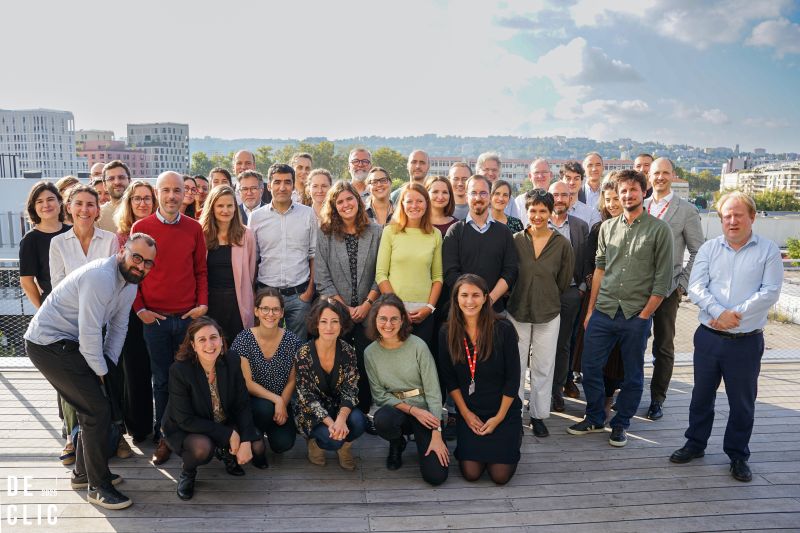
The workshop Designing Alternative Futures, Strategies, and Systems-Changes in the Anthropocene brought together nearly 50 participants from the worlds of business and research, including a dozen doctoral students and young researchers.
One objective: to provide a platform for transdisciplinary and multi-stakeholder discussion and to create bridges between leaders, practitioners, and researchers around a central question - how to do strategy in the Anthropocene era.
For a day and a half, presentations, panel discussions and workshops have stimulated exchanges around three themes:
Theme 1 - The making of futures in Anthropocene: How to imagine, design and learn from alternative, possible and desirable futures?
Socio-economic dynamics are currently neither sustainable nor sustainable and the impacts of global warming, the erosion of biodiversity and the depletion of resources endanger organizations. The era of business as usual is over.
In this context, it is necessary to be able to project oneself not into a near future determined by a short-term strategy but into several possible futures over the medium and long term in order to understand the underlying transformations. This first sequence allowed participants to discuss issues related to the development and practice of foresight in the service of organizations. How to explore possible futures that take into account both their biophysical feasibility and a form of socio-economic “desirable”? How can we tackle both the adaptation and the mitigation of global warming? How do you navigate a turbulent and increasingly uncertain future?
“Until now, we have tended to rather take into account the impacts of our activity on the environment. We must increasingly take into account the impacts of the environment on our activities,” explains Oliver Faust, Senior Vice President Corporate Social Responsibility, at bioMérieux, a participant in the workshop. In 2024, a tornado forced the cessation of production at one of the group's sites in the United States. “It really makes you think about our organization and our vulnerability.”
“These topics need to be considered, in order to allow the company to take a step back and use tools that allow us to project ourselves on the medium and long term,” explains Arnaud Marquis, Chief Sustainability & Safety Officer Of the flooring company Tarkett. “One of the challenges is to change our culture. You have to be able to understand all the disruptions that may happen in the future and that means thinking about the strategy differently.”
Theme 2: Strategy and organization in the Anthropocene - How to develop a common scientific strategic framework for the challenges of the Anthropocene?
Rethinking the practice of strategy was at the heart of the second session of the workshop. Updating the strategy involves navigating tensions, bringing together to define alternative models and supporting the actors of a company - employees, partners, suppliers, customers, investors - in this change of mentality. It is a question of rethinking the strategy at all levels: within organizations and between organizations, at all scales.
“What am I doing today, what am I giving up and how do I implement other offers, how do I reinvent myself tomorrow?” Are some of the questions that arise Karen Lemasson, CSR and Open Innovation Director at Expanscience. “How can I become aware of my own limits, those of my team, those of our partners in order to be able to function?”
“You have to succeed in convincing everyone that a model that is more virtuous, at least in the short or medium term, is a model that costs a little bit more,” according to Arnaud Marquis.
Theme 3: Designing systemic changes in the Anthropocene - How to promote/enable systemic transformations?
These changes cannot take place in isolation - they require systemic transformations and coordinated and coherent actions and processes at ecological, social and economic levels between actors and at different scales.
The third and final sequence of the workshop focused on these systemic issues. How to navigate between different thought systems, what are the right levers and entry points? How do we think about the strategy together?
According to Karen Lemasson, “The world tomorrow will work in ecosystems. To cooperate, you have to know and understand each other.”
IF Initiative at the heart of discussions
The questions addressed during the workshop are at the heart of the work ofIF Initiative. Several members of the team were there to lead the discussions but also to present their work during dedicated sequences.
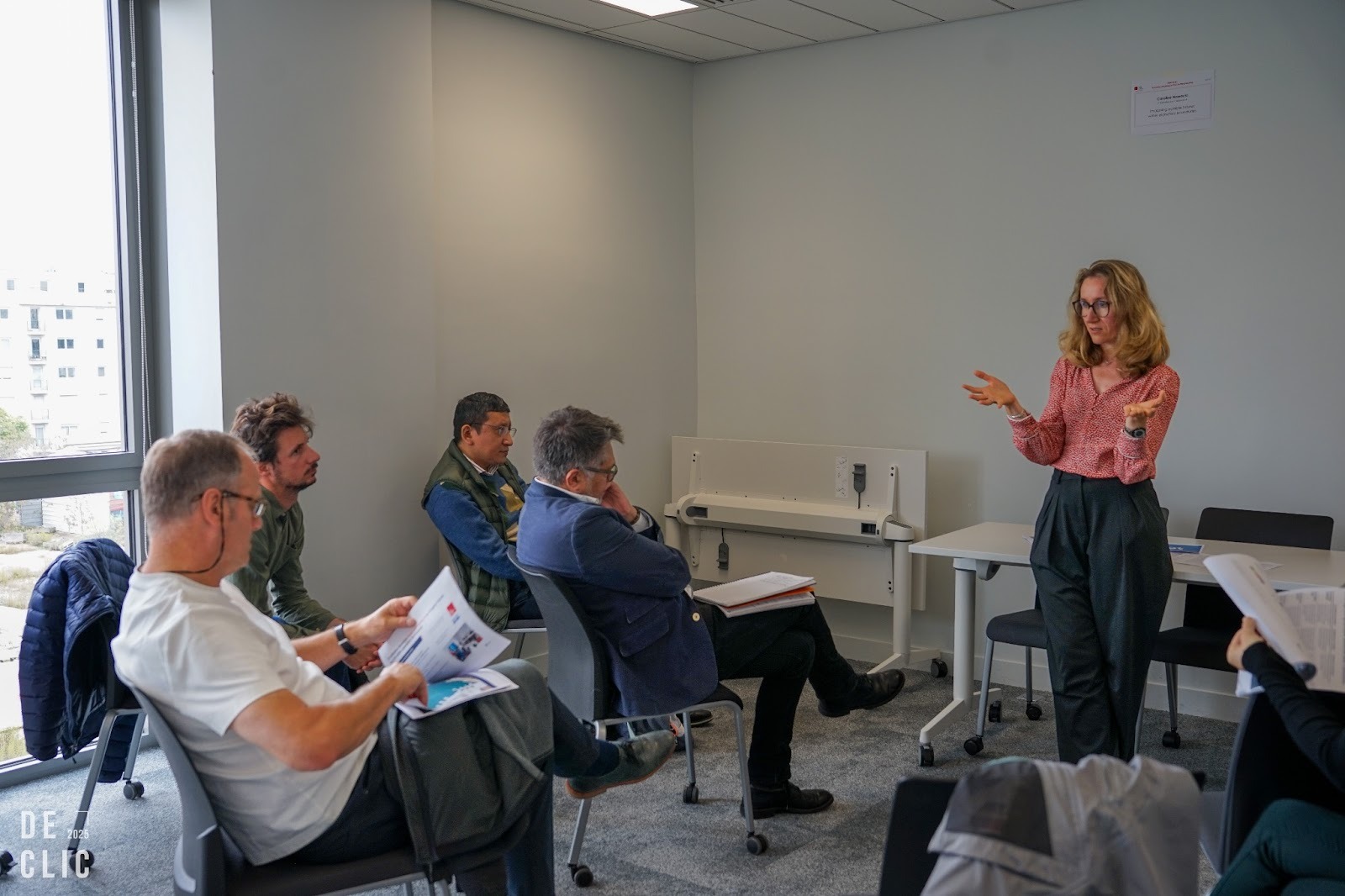
Caroline Nowacki, Manager at IF Initiative and head of the scenarios division, led a workshop around the question Imagining Possible Futures Within Planetary Boundaries. She presented the IF Initiative work on the construction of prospective “reference” scenarios exploring the transformation of human activities and their involvement in the crossing of planetary boundaries.
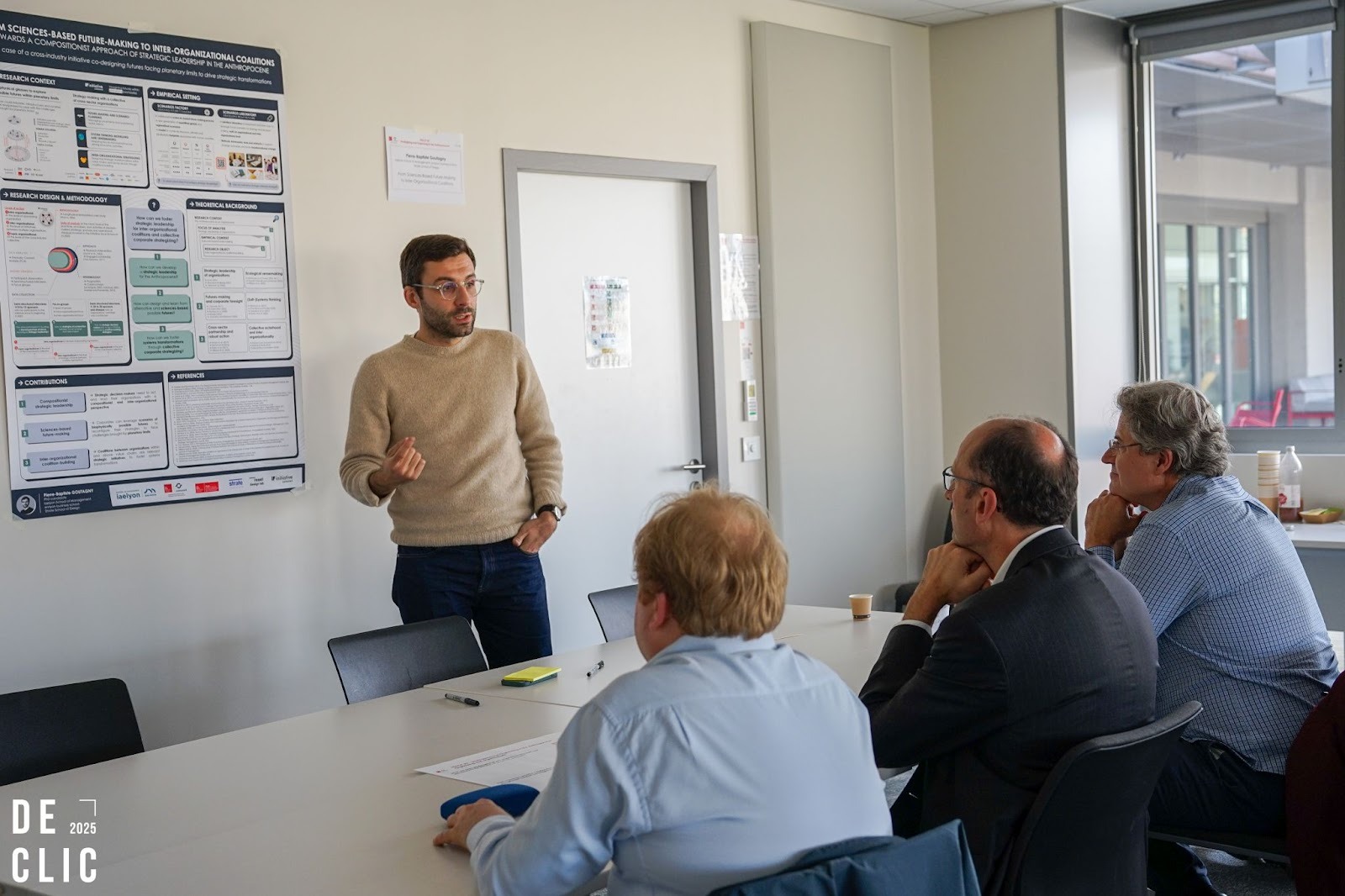
Pierre-Baptiste Goutagny, Senior Development Manager at IF Initiative and doctoral student at iae Lyon School of Management, presented his research work with a poster entitled From Sciences-Based Future-Making to Inter-Organizational Coalitions. In particular, he was able to share the construction of a “shared grammar of futures” within IF Initiative can allow member organizations to consider collective strategic actions and promote the emergence of cooperations and alliances.
Understanding each other to better collaborate
The central idea of this workshop: to find together a common language to advance knowledge and practices for an Anthropocene strategy. During the day and a half of the workshop, the discussions highlighted not only the need to set up forums for exchange between disciplines such asAlternative Futures but also the desire of economic actors to confront the expertise of researchers, and that of researchers to confront their work and results with the practical challenges of companies.
“This type of event makes it possible to bring this world together to combine our strengths, our experience and our expertise,” explains Karen Lemasson. “It's extremely rich and valuable.”
Oliver Faust in particular, emphasized the importance of “regularly changing your point of view, changing your perspective, taking a step back and thinking from a different perspective in order to bring out new ideas.”
It is these needs that the Chair and the work of IF Initiative want to continue to meet.
“This is what we are doing in particular with the participation in the Carbone 4 project,” explains Arnaud Marquis, “to understand the different scenarios that could occur in the medium to long term and to what extent these scenarios could influence our business models, influence market demand, the availability of raw materials, and to what extent the strategies already implemented - developing the circular economy, reducing the carbon footprint - are sufficient or not sufficient to deal with all these uncertainties of our Anthropocene era.”
Read our Tribune co-written with emlyon and published in Les Echos : “Decision-makers, managers and researchers must work together to build organizations that are reconciled with the Earth system.”
Explore our four pre-series scenarios here. : https://www.ifinitiative.com/explorer

