
Share.

Our resources
Discover our latest publications, analysis articles, webinars, and podcasts. Our objective: to enable the whole of society to deal with technical subjects that are sometimes complex, and to provide essential keys of understanding in order to inform the debate on the relevant action to be taken.


Prospective stratégique et limites planétaires : construire une nouvelle grammaire de futurs possibles

Pour des stratégies de coalitions face aux limites planétaires - Les scénarios IF Initiative comme grammaire de futurs partagés
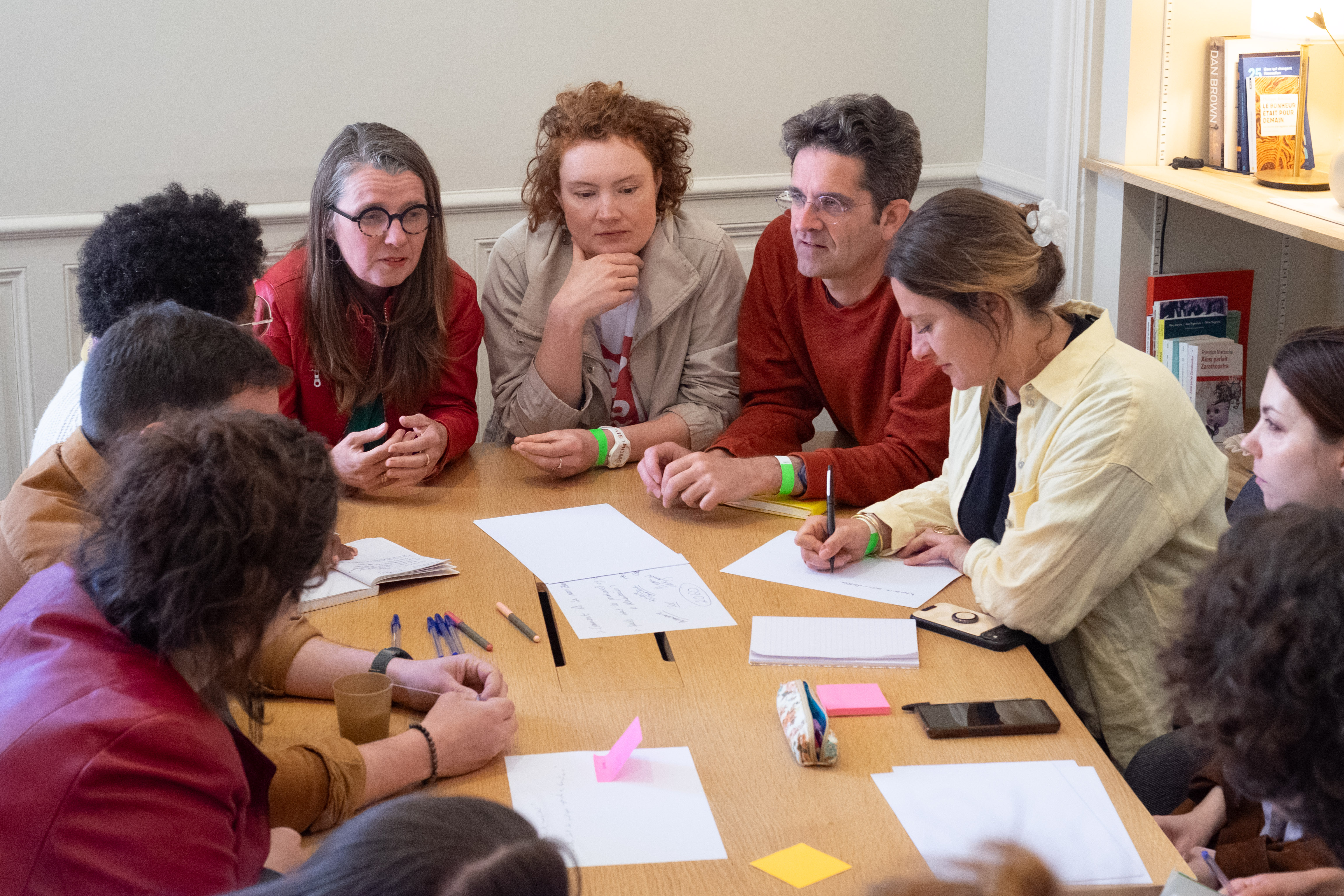
Comment prendre en compte les limites planétaires dans les stratégies de design au niveau local ?

Terra incognita : Un mariage à 3°
Une fiction pour s’immerger dans le scénario Terra Incognita.

La prise de décision face à l’incertitude : IF Initiative par Carbone 4, The Shift Project et emlyon business school co-organisent une soirée des Rencontres Académiques du Shift

Croiser approches prospective et systémique - IF Initiative intervient auprès des étudiants de la Montpellier Business School

De la modélisation et la scénarisation prospective à la prise de décision stratégique face aux limites planétaires

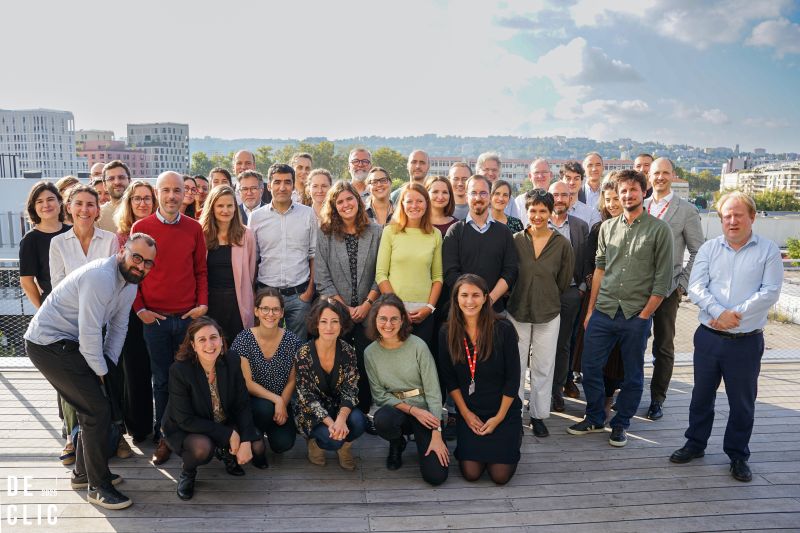
IF Initiative is co-organizing an “Alternative Futures” workshop to bring together decision-makers and researchers around the theoretical and practical challenges of Anthropocene strategy
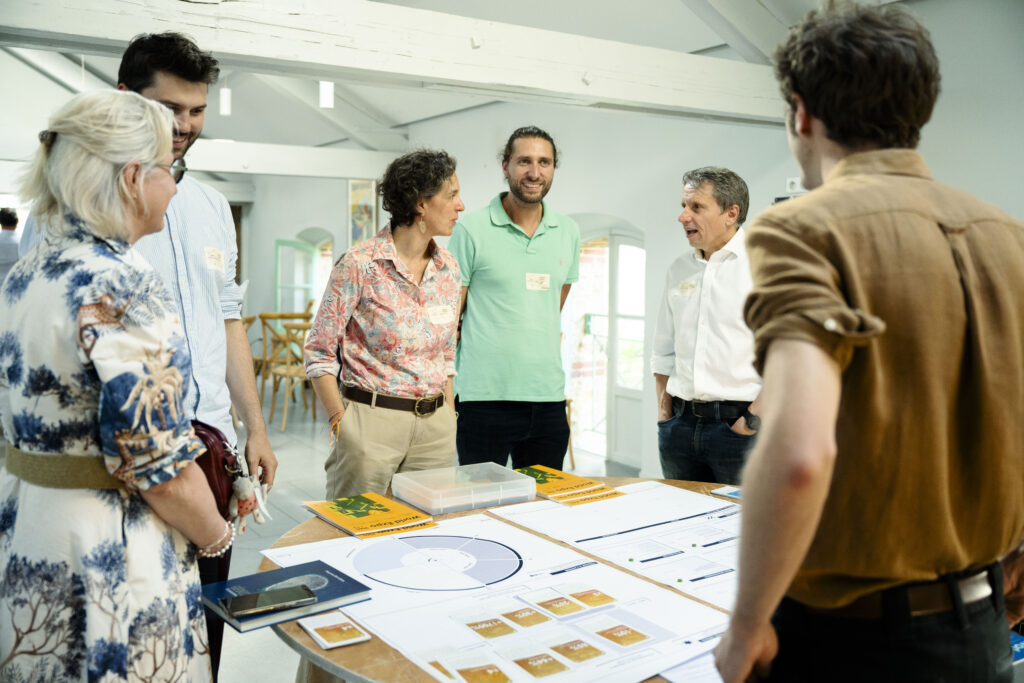
Comment équiper les organisations face à l’Anthropocène ? IF Initiative présente les outils et méthodes développées pour et avec les entreprises lors de l’assemblée générale du C3D

The future of aviation: IF Initiative presents its work at the National School of Civil Aviation



FAQS
IF Initiative is a collaborative innovation approach for and with companies, initiated and managed by Carbone 4. It also benefits from the support of 6 research teams. The work carried out focuses on the design and dissemination of a new standard for business foresight and strategy. The challenge is to equip them to better understand the transformations of their activities confronted with global limits (climate, biodiversity, resources), to objectify strategic discussions with their stakeholders on these subjects and ultimately to build robust strategies.
The work of IF Initiative focuses on 2 main areas:
The first axis consists of develop and test the new standard for business foresight and strategy.
It is structured around two activities:
1. Exploring “Futures in the Anthropocene” : We are developing scenario-building capabilities using an original method, specific to IF.
These scenarios describe how the business environment for companies could be transformed in a finite world, both under the effect of changing lifestyles and technology, and the constraints imposed by the environment (climate and biodiversity objectives, access to resources and the impacts of climate change). They include quantified physical descriptions of business sectors and are accompanied by narratives and immersive elements.
2. The making of the “Anthropocene Strategy”: we are developing Guidelines to operationalize foresight strategic based on the IF Initiative scenarios. More concretely, it is a question of developing a set of original analysis processes to meet the operational needs of companies based on data from IF scenarios, in an adapted format. (For example: identify the business risks and opportunities to which the company could be exposed in a given scenario.) A Carbone 4 - emlyon “Strategy in the Anthropocene” chair was created to contribute fully to this work.
The member companies of IF Initiative are closely involved in developments (orientation, production, testing) in particular in order to guarantee the applicative nature of the framework.
The 2nd axis covers support and implementation of the standard in a process of continuous improvement. This includes in particular: Devices group or individual support (awareness-raising, training, green teaming, etc.) Tailor-made work to deepen specific issues (for example: focus on the lithium resource, on carbon-free electricity production capacities for SAF production, etc.). Collective exploration of themes based on the framework developed in IF Initiative (for example hydrogen for decarbonization: where, how, in what quantity, under what condition and what counterparts?).
Joining and contributing to IF Initiative means obtaining several benefits today (2025) and tomorrow (from 2026):
1. To be at the heart of construction and thus appropriate this new standard : companies collectively guide and validate the work, arbitrate technical choices based on a proposal from Carbone 4.
2. Enrich in the dynamics of a collective of pioneer companies (networking, group work, feedback, experience, sharing of best practices, sectoral expertise covering all sectors).
3. Have premium access to IF Initiative productions (e.g. immersions, visualizations and advanced datasets to fully exploit scenarios).
4. Be supported to make your organization aware of the business challenges of the Anthropocene
5. Initiate the training of its teams thanks to dedicated devices allowing just as much to respond to the CSRD than to feed your strategic analyses with a rigorous framework
6. Strengthen your employer brand (a pioneer and committed company)
7. Access a strategic framework dedicated to the challenges of the Anthropocene at a lower cost (pooling of efforts).
By assessing the biophysical footprint of economic activities, the IF initiative scenarios help to identify the transformations required for these activities (with a sectoral and value chain vision) to become compatible with a given set of environmental, resource, resource, societal, and technical constraints. This allows businesses to explore different configurations of economic activities based on different sets of constraints. Therefore, unlike linear forecasting tools based on past trends and siloed sectoral approaches, IF Initiative's scenarios do not seek to be predictive, but exploratory and systemic. They integrate new dimensions such as environmental constraints (climate, pressures on biodiversity), the scarcity of resources, societal and technological developments, and explore how the various economic sectors are impacted and interconnected through a systemic approach.
Each scenario describes what human societies might look like in the second half of the 21st century (between 2050 and 2070). Intermediate stages can be analyzed, with nearby milestones, subject to additional screenwriting work.
The scenarios cover key sectors such as energy, transport, agriculture, construction, but also textiles, health and information technology, among others. The degree of granularity offered by IF scenarios allows us to go down to the level of sub-sectors (for example, road, rail and air transport of people, diverse crops and livestock, residential and tertiary buildings, etc.) in 11 major regions of the world (work in progress).
Even if this is not their primary purpose, IF scenarios are built in such a way that they can help meet the criteria defined by the CSRD for scenario analysis (transition risks). Our scenarios indeed provide useful data for documenting transition risks and opportunities, as they focus on sectoral flows in several contrasting scenarios. In addition, IF scenarios have the advantage of simultaneously covering transition risks and physical risks related to climate drift (and biodiversity erosion). Note that collaborative work with the sponsors of the initiative is underway to specify the needs for CSRD reporting by companies, and to propose a way to use IF scenarios to meet them.
Each scenario is developed based on information specific to each sector, in terms of uses, market size, technical performance (from experts from our partner companies and Carbone 4's own expertise), etc. Thanks to its native multi-sectoral approach, IF Initiative thus makes it possible to cover for each sector the risks related to the availability of resources, climate feedback, supply chain disruptions, organizational and regulatory constraints, changes in the supply chain, organizational and regulatory constraints, societal. The biophysical approach adopted in IF Initiative thus makes it possible to quantify the evolution of the activities of each sector through the underlying physical flows, under these different sets of constraints. We can then deduce the level of transformation (and therefore both the risks and the opportunities) to which each sector is subject.
By their very nature, IF scenarios, built around the real activities of sectors of the economy facing various constraints and limitations, make it possible to identify the critical future risks such as resource tensions, environmental impacts, geopolitical conflicts, and societal and regulatory changes, thus making it possible to establish proactive risk mitigation strategies.
The scenarios incorporate specific geopolitical scenarios, built with the help of various experts in this field, and chosen with our partner companies. These scenarios revolve around 3 major dimensions: the level of exchanges between blocks, the state of the geopolitics of decarbonization, and the international distribution of power. In particular, they involve different hypotheses about the constraints of access to resources (or associated products) in each area of influence, and also provide a certain differentiation in the evolution of lifestyles and associated value systems. Regulatory changes and global agreements to assess impacts on different industries and supply chains. When the hypotheses describing the scenarios are compatible with the associated set of constraints (we then speak of “physical feedback”), organizational and regulatory counterparts are built ex-post to highlight the conditions for achieving these scenarios.
The scenarios provide an overview of resource shortages potential, which allows strategic decisions to be made concerningadaptation of the supply chain And the diversification of resources.In practice, the approach proposed by IF Initiative to model the biophysical economy makes it possible to assess the demand for critical resources in all sectors of the economy. By comparing it to the limits of the global (and regional) availability of these resources, it is possible to estimate the level of pressure on supply. Each scenario then proposes its own approach to resolve the competition between uses in order to arbitrate access to these resources.
On the one hand, the planetary boundaries are translated in IF Initiative in the form of hypotheses: it is either selected limits (such as the carbon budget or forest areas), or limits suffered (such as the physical feedback of climate change, the availability of water, or the growth rate of lithium extraction). On the other hand, the scenarios detail a number ofbiophysical impacts (for example, carbon footprint, resource consumption, pollutant emissions) that are linked to human activities, guaranteeing potential compliance with ESG goals. (Environment, Social and Governance).
In the same way that scenarios highlight potential business risks associated with various sets of constraints, they also provide businesses with solid data to define the market opportunities future in each sector (sustainable technologies, business models in line with limits, etc.)

